Civic MarginRead the decisions that shape your town.
A journal of local government

Read past the agenda.

Follow a local proposal from its first draft to a vote. Civic Margin uses fictional case files to show where decisions happen and how residents can take part.

Compare two proposals ↗
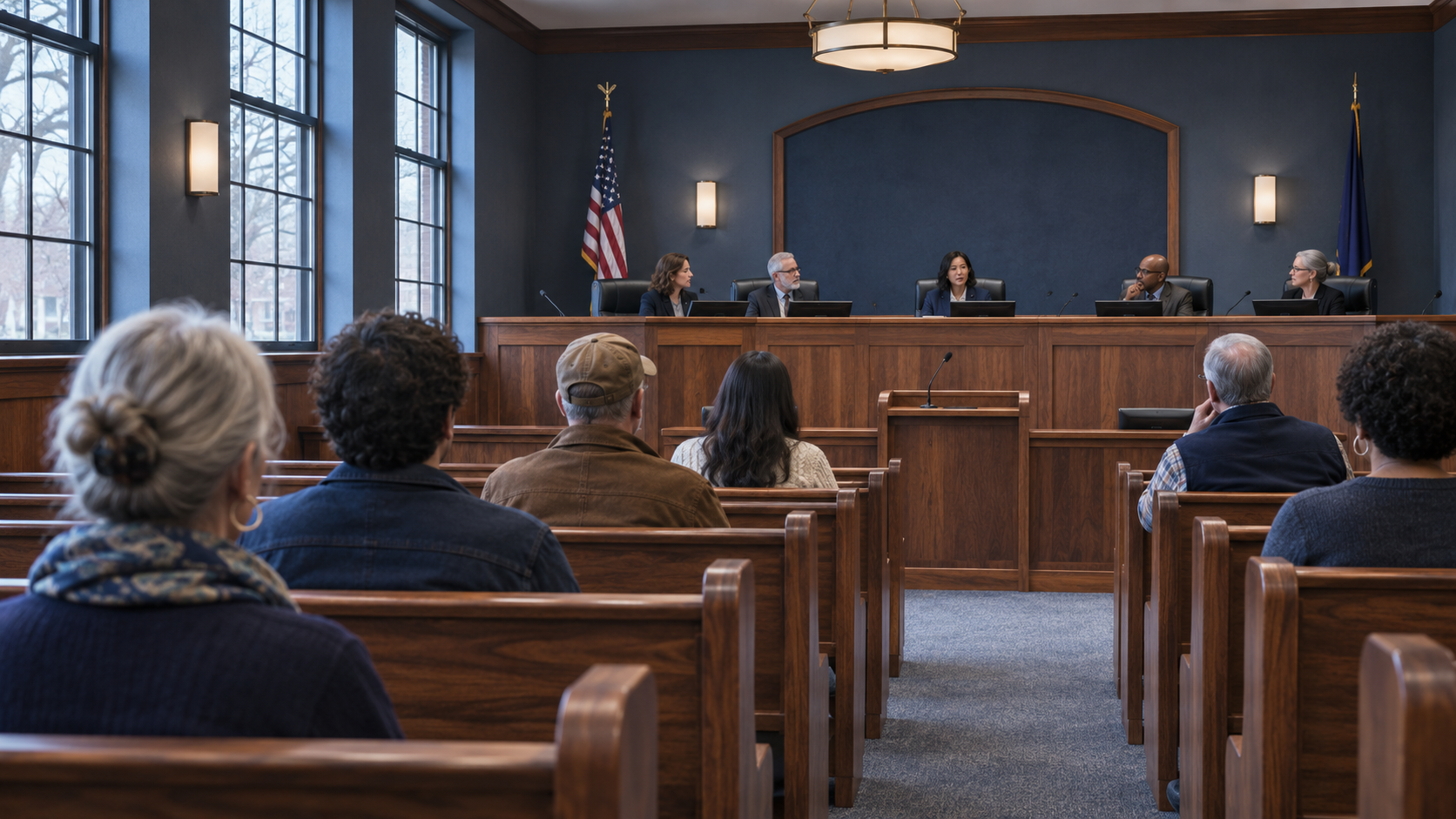
Residents seated in the public gallery of a municipal council chamber
From the policy desk

What to look for in the record.

A curb pilot reaches committee

In our sample city of West Alder, the transportation committee is reviewing a proposal to change loading hours downtown. Its staff report sets out the proposed blocks and times. The draft also asks staff to track delivery delays and accessibility complaints during the trial.

How to read an amendment

A short amendment can change the scope of an entire proposal. Read the affected paragraph with the proposed language inserted, then see whether it changes who is covered, when the rule applies or which office makes the decision.

What the staff memo tells you

Start with the cost estimate and the implementation plan. Check where the budget number came from and whether it includes staff time. Look for a planned review date so you can follow the outcome after the vote.

Interactive policy comparison

Two approaches to the same curb.

Both sample plans aim to reduce delivery conflicts on three downtown blocks. Compare the specific tradeoffs a committee would need to discuss before choosing one approach.

Choose a topic to narrow the table. Each row describes how the two proposals handle the same question.


TopicTimed loadingShared bays
Access hoursLoading only from 7 to 10 a.m.Short loading stops all day in marked bays.
ImplementationReplace time signs on the three blocks.Paint bays and add curb signs.
ReviewReview delivery delays after 60 days.Review bay occupancy and access complaints after 90 days.

3 topics shown

Public participation

Put a specific request on the record.

Identify the proposal, explain how it affects you or a group you represent, and ask for one concrete change or piece of information. A short example from the affected block can help committee members understand the practical consequences.

Public comment and lobbying are different ways to participate in the legislative process. Check the meeting notice for comment procedures. If you represent an organization, check the relevant clerk or ethics office for applicable disclosure rules.

Use the public comment checklist ↗
Legal and civic resources

Find the document you need.

Public comment checklist

Write down the agenda item, meeting date, sign-up procedure and time limit. Prepare a short statement and ask the clerk how to submit a written copy.

Statute, ordinance or resolution?

A statute is enacted by a legislature. Local bodies use ordinances and resolutions for different purposes, depending on the jurisdiction. Look for the complete adopted text and any later amendments in the official register or clerk’s records.

Finding records and civil liberties support

Ask the relevant records office how to locate agendas, minutes and staff reports. If you’re concerned about your rights at a public meeting, a local legal aid organization may be able to explain the applicable rules and options.