
Freshwater Science
Work with water chemistry, stream ecology and spatial data. Introductory biology and statistics are prerequisites for the junior field methods course, which compares runoff across land-use types.
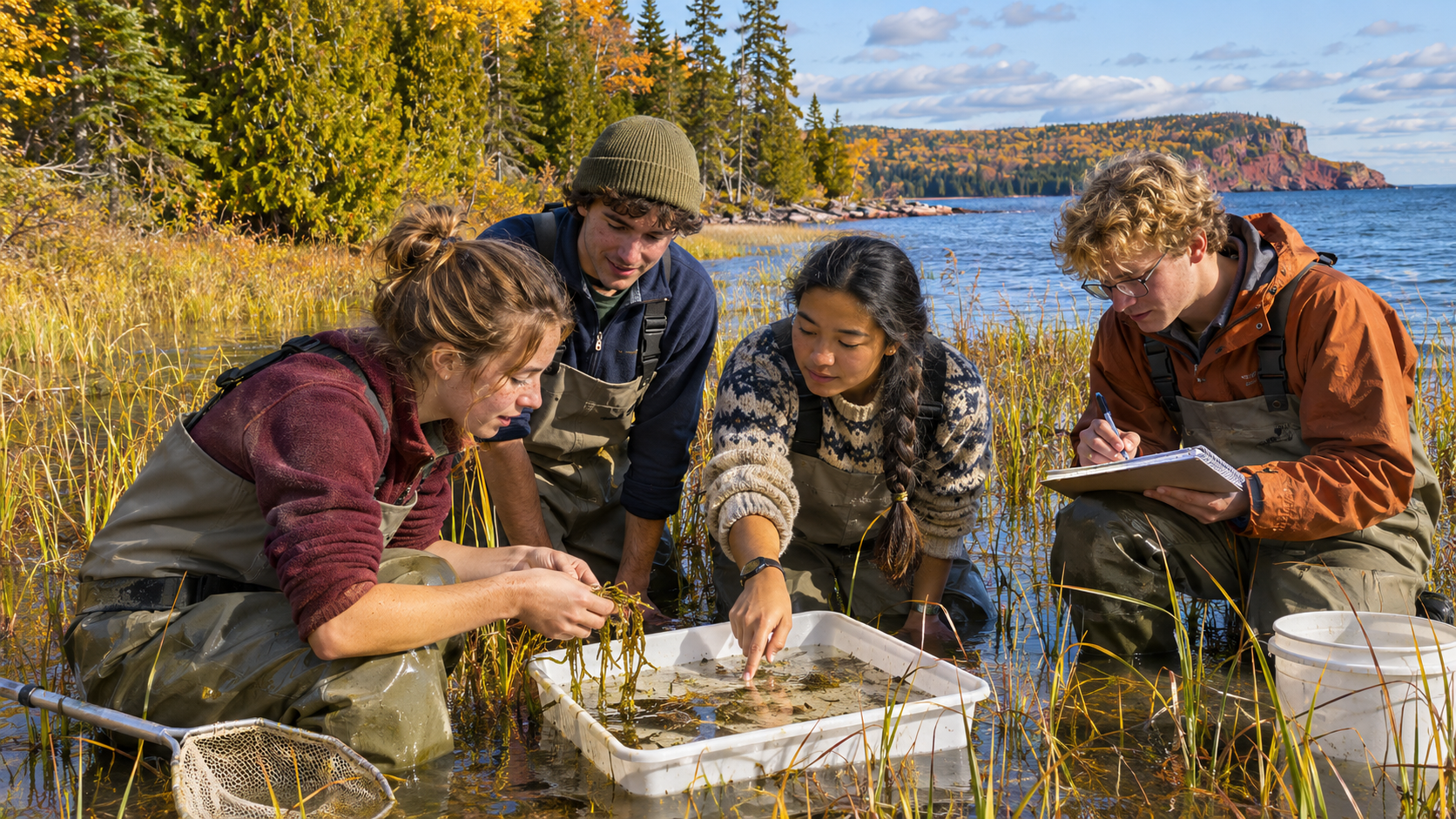
Study the places where freshwater, working communities and public policy meet. At Copper Point, the shoreline is part of your classroom from your first semester.
Explore undergraduate programs ↗All majors start with a first-year seminar on the Lake Superior watershed. You’ll practice field observation, interpret primary sources and present a finding before choosing an upper-level research question.
Work with water chemistry, stream ecology and spatial data. Introductory biology and statistics are prerequisites for the junior field methods course, which compares runoff across land-use types.
Use mapping and public engagement to study housing, transportation and land use. Seniors complete a supervised planning project with a community partner and present their findings in a public review.
Read regional literature alongside oral histories and public records. Graduation requirements include an upper-level writing seminar and a thesis or public exhibit developed with a faculty adviser.
The Shoreline Observatory records water temperature, vegetation cover and seasonal changes at six sites. Student researchers revisit the same stations throughout the year and publish a methods log alongside their findings.
Second-year students can join a sampling team for credit. Seniors can use the archive as a starting point for a thesis or propose new work with a faculty sponsor.
Ortiz teaches field methods and studies how shoreline restoration affects small streams. In her lab, undergraduates rotate through sampling, data entry and peer review before taking responsibility for a station.
Ask about field research ↗Start by choosing a degree pathway and requesting transcripts from each school you’ve attended. If you’re transferring, ask an adviser to review your completed courses before choosing first-term classes.
Campus visits include a walk through the teaching labs and a conversation with a student guide. Ask for an accessible route or remote appointment when you schedule.
Schedule a campus tour ↗Mark items as you complete them. This planner keeps track in your browser.
0 of 4 complete
Use the links below to plan registration, book academic support or prepare for independent research.
Before registration, check your program prerequisites and bring a draft schedule to your advising appointment.
Email advisingBring your assignment and a draft or outline. Peer tutors can help you narrow a question, organize evidence and check that each claim has a source.
Request a writing appointmentAsk a librarian for help with local archives, map collections or data management. Thesis students can request a consultation before they begin collecting material.
Email the library